
Category: Archve
-
…55 years ago
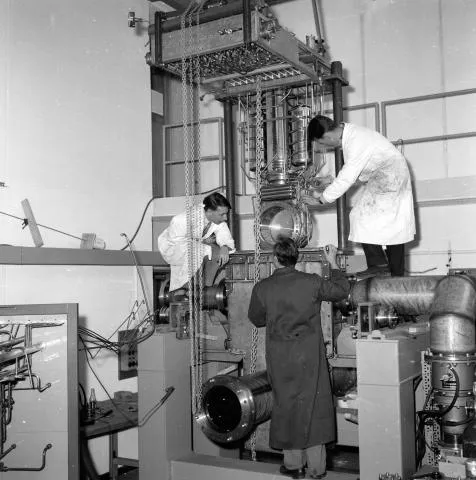
The 30cm liquid hydrogen bubble chamber (HBC30) – here seen being inserted into its vacuum tank in March 1959 – was the first bubble chamber to be used for physics experiments at CERN. After testing with nitrogen and hydrogen it was placed in the Synchro-Cyclotron, and its first five days of operation in November yielded
-
…48 years ago
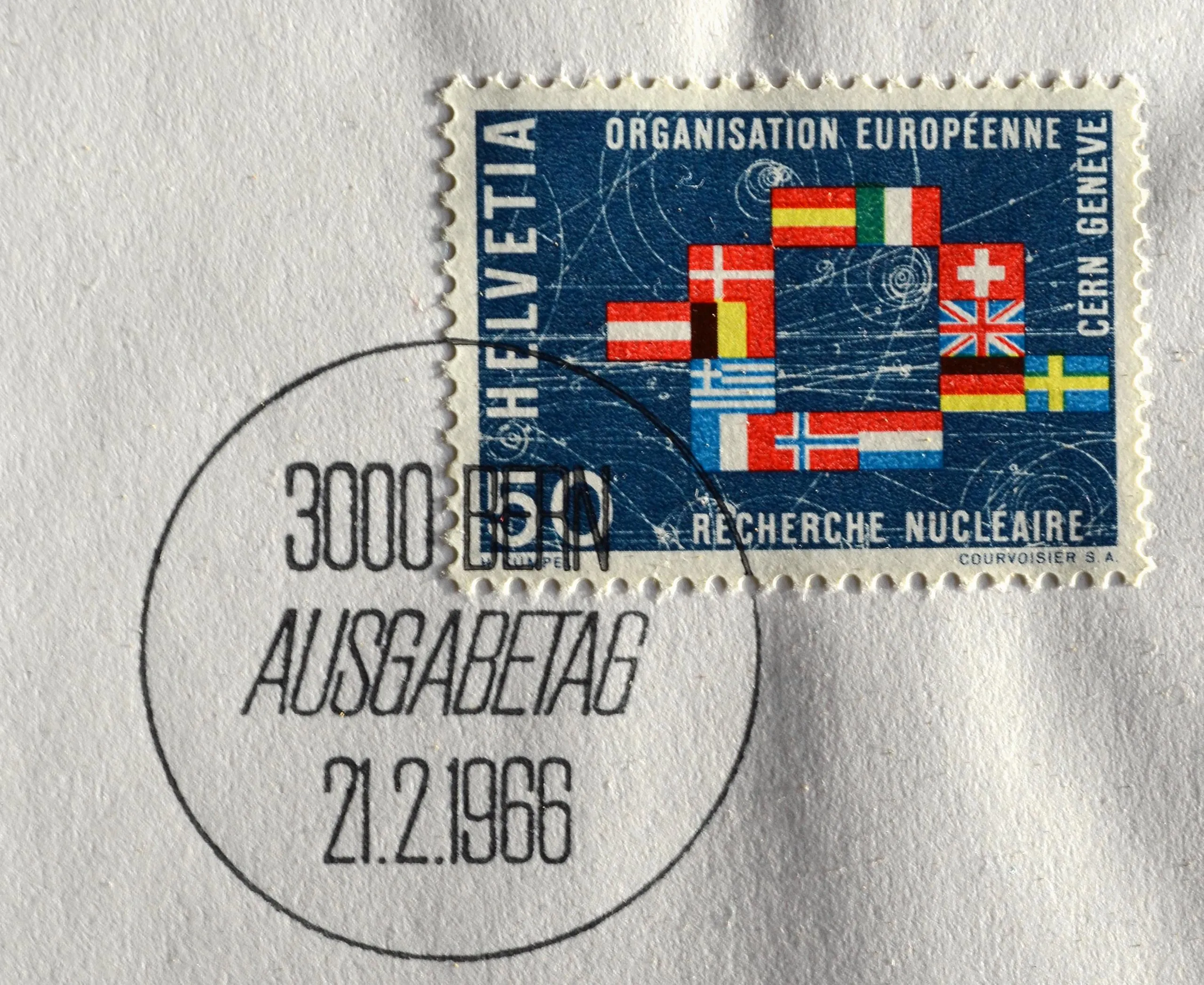
On 21 February 1966 the Swiss Postal Authorities issued a 50 centime postage stamp in honour of CERN. Five Swiss artists visited CERN and were shown around the site, then each presented two designs. The judges selected a design by H. Kumpel showing the flags of the thirteen Member States of CERN superimposed on a
-
…86 years ago
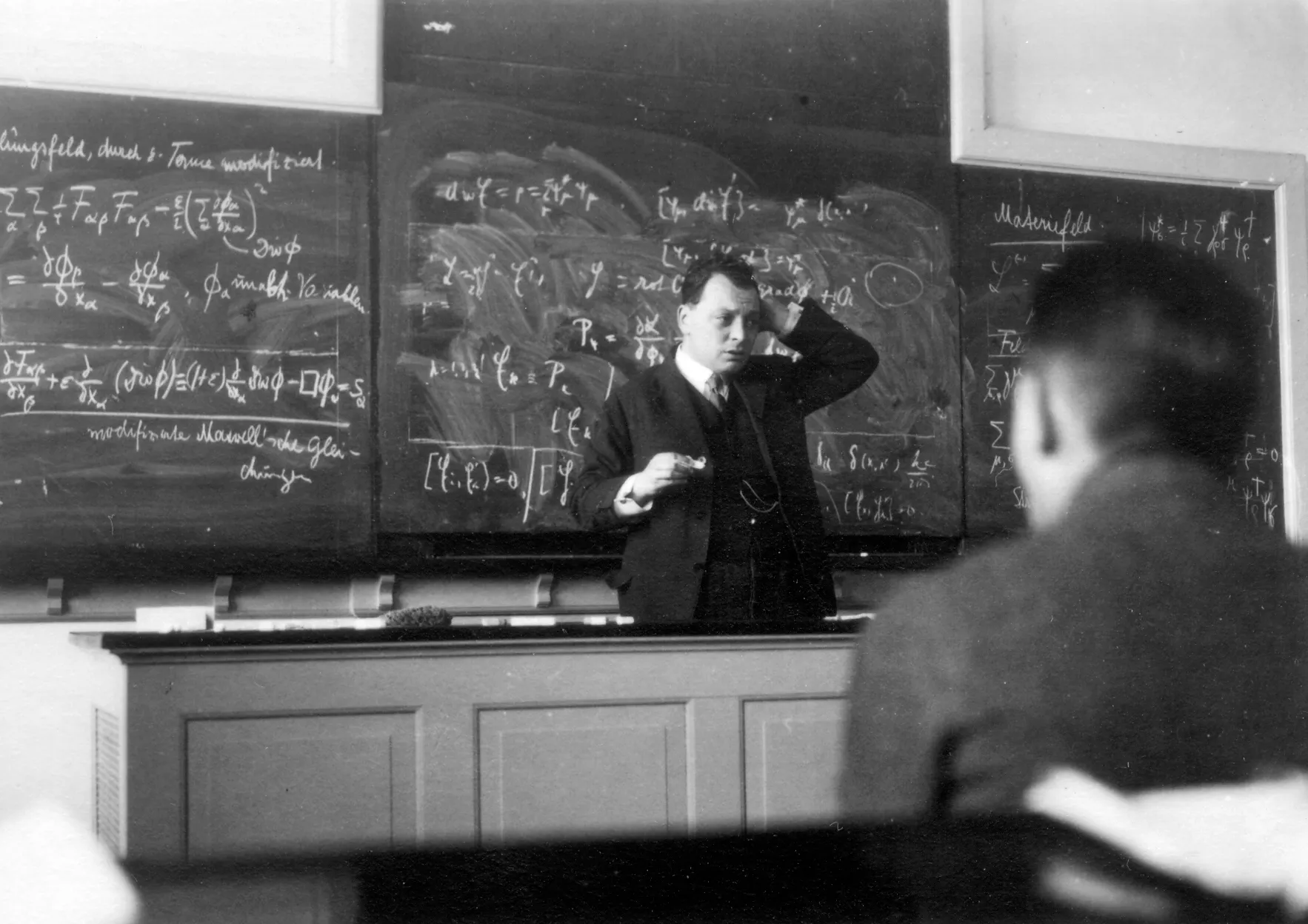
Despite some reservations about his lecturing style, Wolfgang Pauli was appointed professor of theoretical physics at the ETH, Zürich, on 10 January 1928. He started on 1 April at a basic annual salary of 15,000 francs. Pauli’s lectures could sometimes be challenging. The equations in this photo (taken in Copenhagen in 1929) look fairly legible,
-
…67 years ago
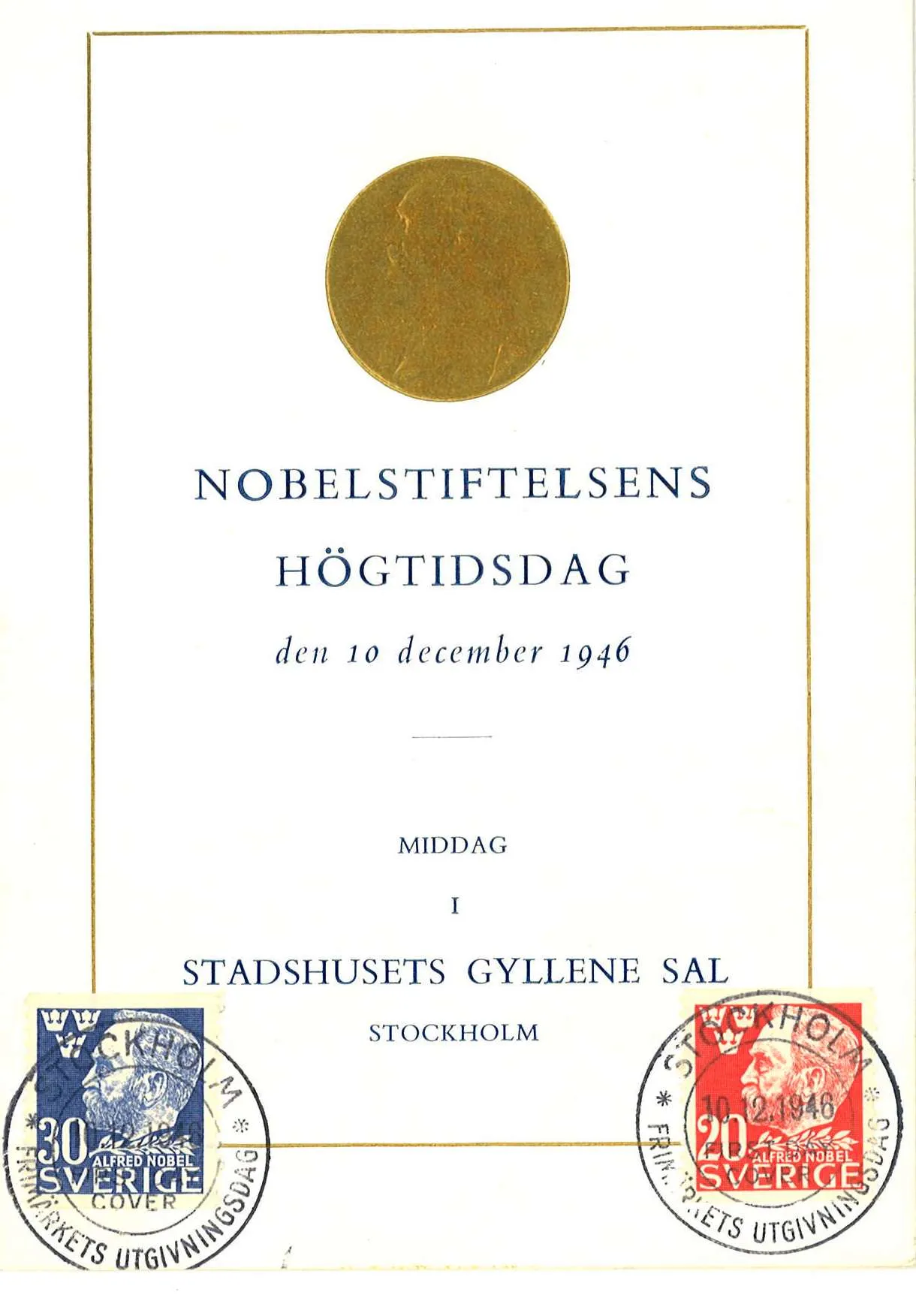
The date on this menu for Wolfgang Pauli’s Nobel prize festivities is 1946, yet he was awarded the physics prize for his exclusion principle in 1945. In a letter to Niels Bohr (25 November 1945) he explains the delay: “Dear Bohr! It was a great exciting surprise that the Nobel prize was awarded to me
-
…54 years ago
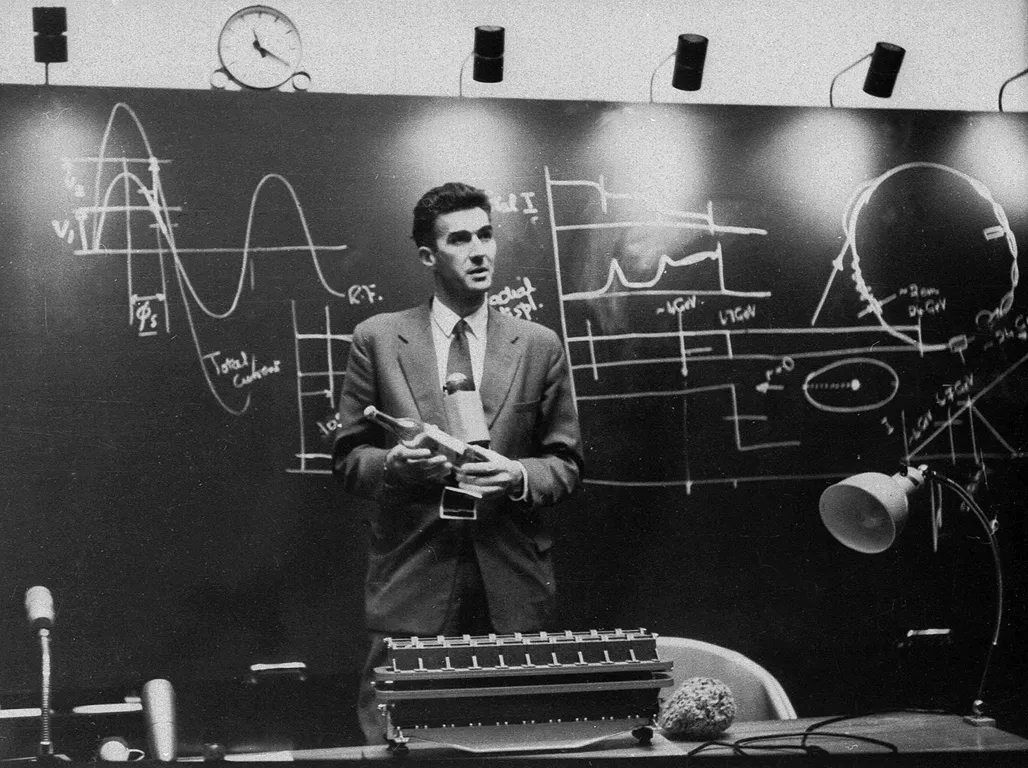
The Large Hadron Collider (LHC) is the world’s biggest and most powerful particle accelerator, but for a few months in 1959 the Proton Synchrotron (PS) shared the same distinction. The PS reached its full design energy of 24 GeV (later increased to 28 GeV) during the night of 24 November 1959, and the following morning
-
…56 years ago
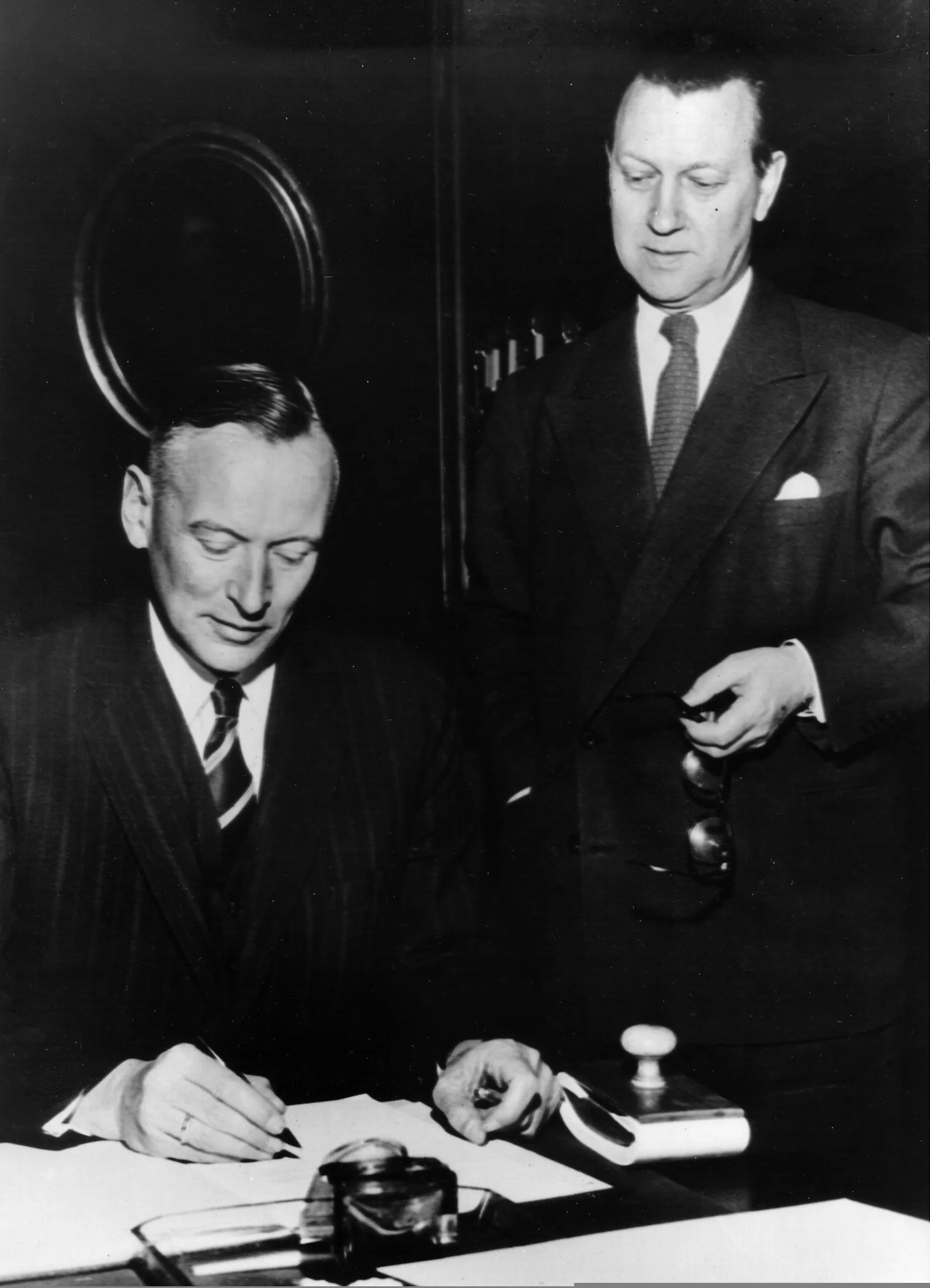
During the construction of CERN in the 1950s, most staff were lodged in temporary offices nearby. But the theoretical physics group (one of three study groups set up in 1952 as part of the ‘provisional CERN’) began life at the Theoretical Physics Institute, University of Copenhagen. Niels Bohr led the group until September 1954, then
-
…86 years ago
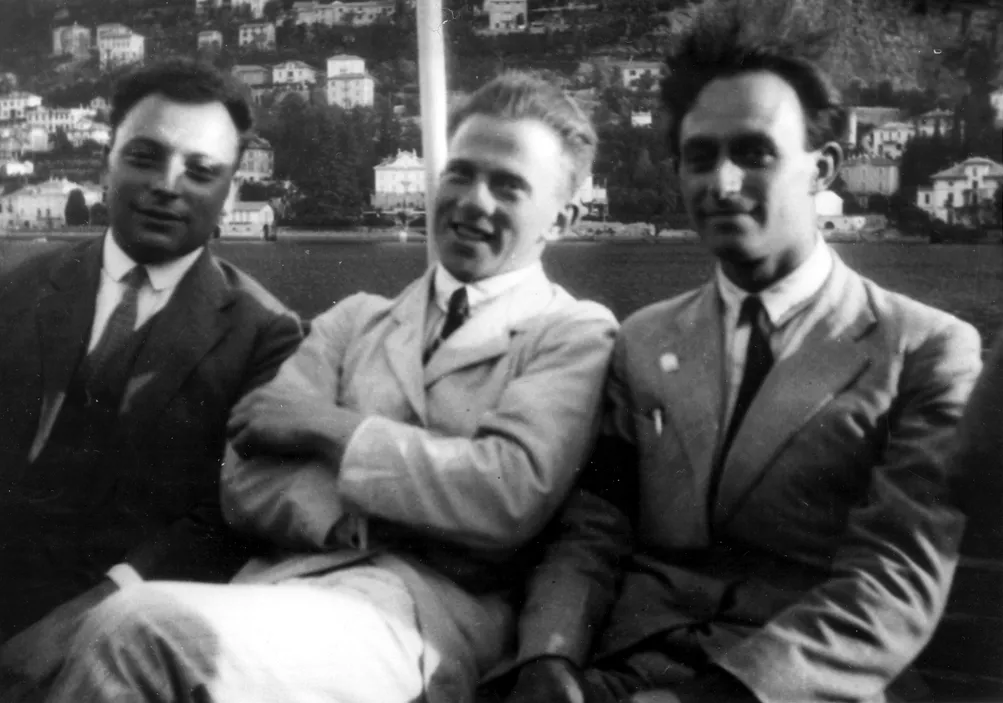
Wolfgang Pauli, Werner Heisenberg and Enrico Fermi relax on Lake Como during the 1927 International Conference on Physics. The 1927 conference (held in Como to commemorate the 100th anniversary of the death of Alessandro Volta) is famous for Niels Bohr’s first presentation of his ideas on complementarity. His lecture “The Quantum Postulate and the Recent
-
…61 years ago
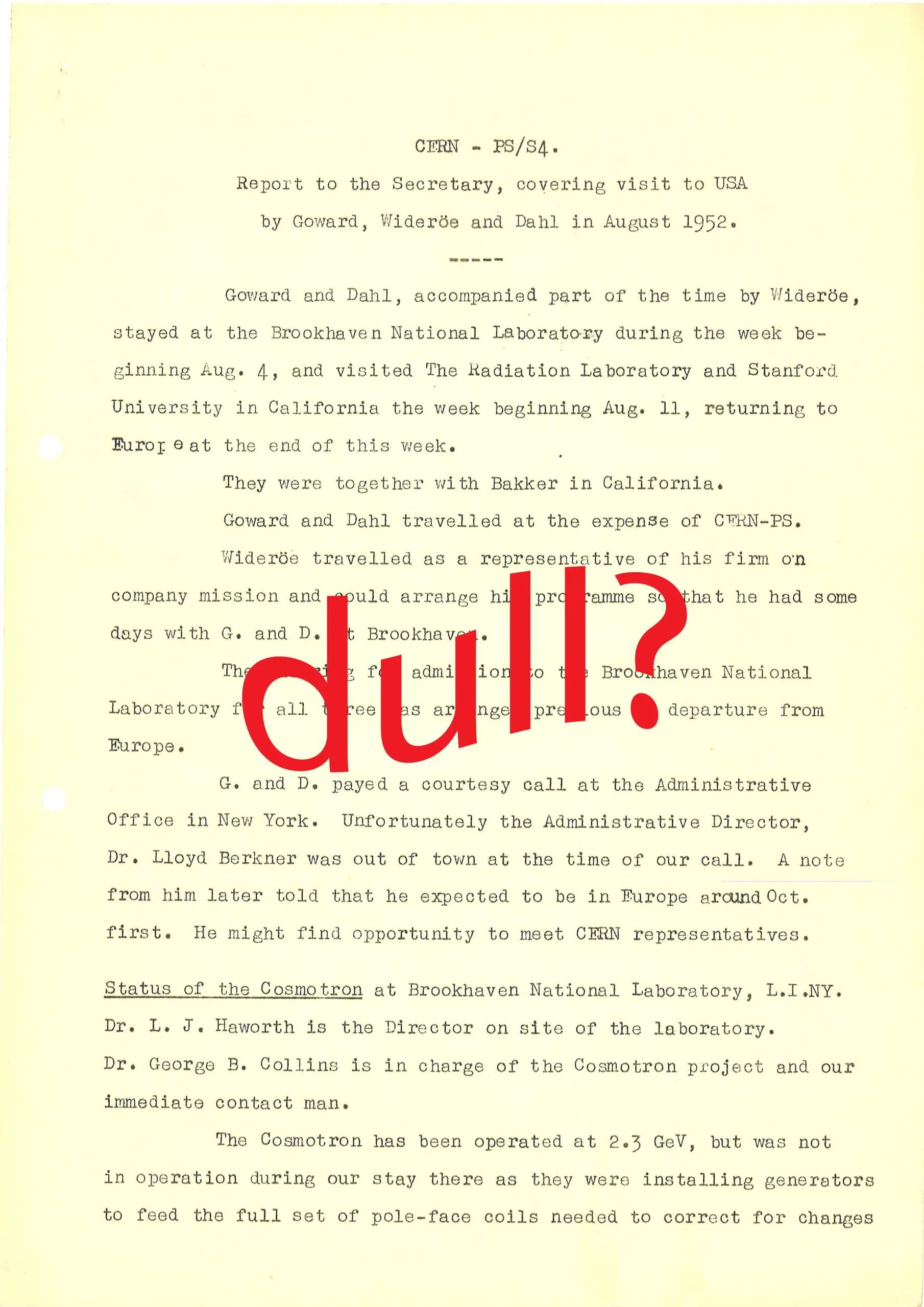
Too often trip reports are just boring administrative documents, but this one caused a radical rethink of the design for CERN’s Proton Synchrotron. Suddenly a relatively straightforward engineering challenge became a development project for an untested idea. Plans were already underway for CERN’s large accelerator, a scaled-up version of Brookhaven’s Cosmotron, when Odd Dahl, Frank
-
…57 years ago
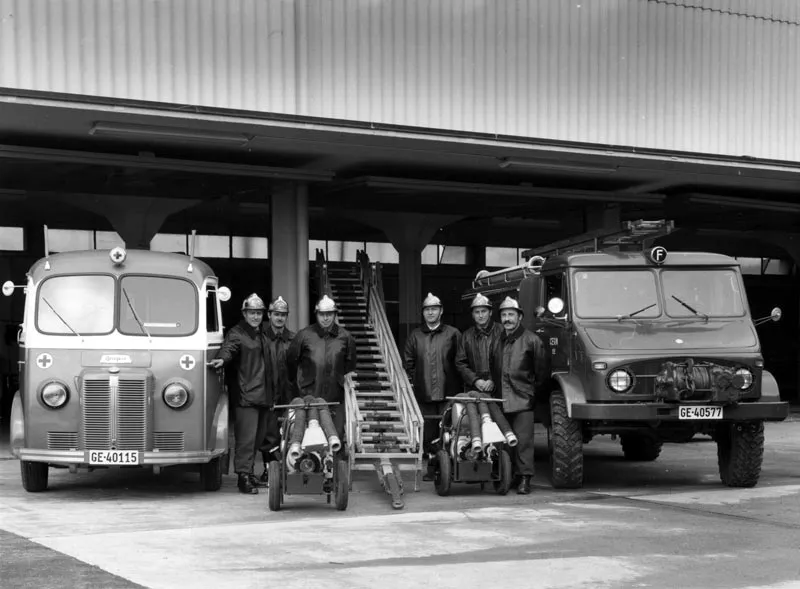
Safety is top priority in any scientific research laboratory, and fire prevention was an important issue from the earliest days of CERN. The newly constructed buildings were fitted with smoke detectors, and voluntary fire brigades and first aid teams were set up among staff members. The appointment of CERN’s first fire service chief, Pierre Vosdey,
-
…57 years ago
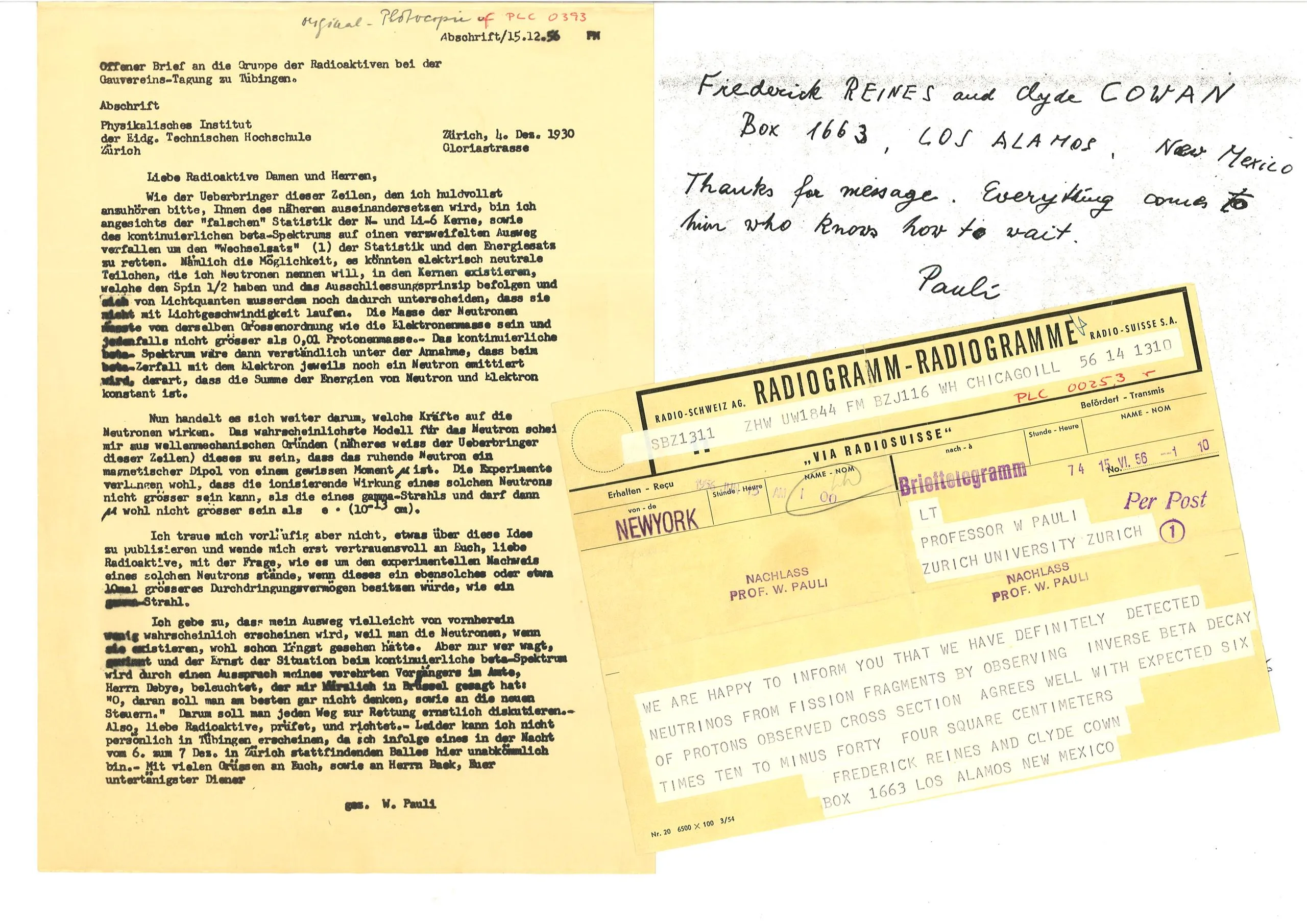
On 14 June 1956 a telegram from Frederick Reines and Clyde Cowan informed Wolfgang Pauli that neutrinos had been detected from fission fragments – nearly 26 years after Pauli first postulated the neutral particle as a solution to the missing energy during beta decay. Pauli had outlined his theory in a letter to the ‘Dear