
Category: Archve
-
…This month 89 years ago
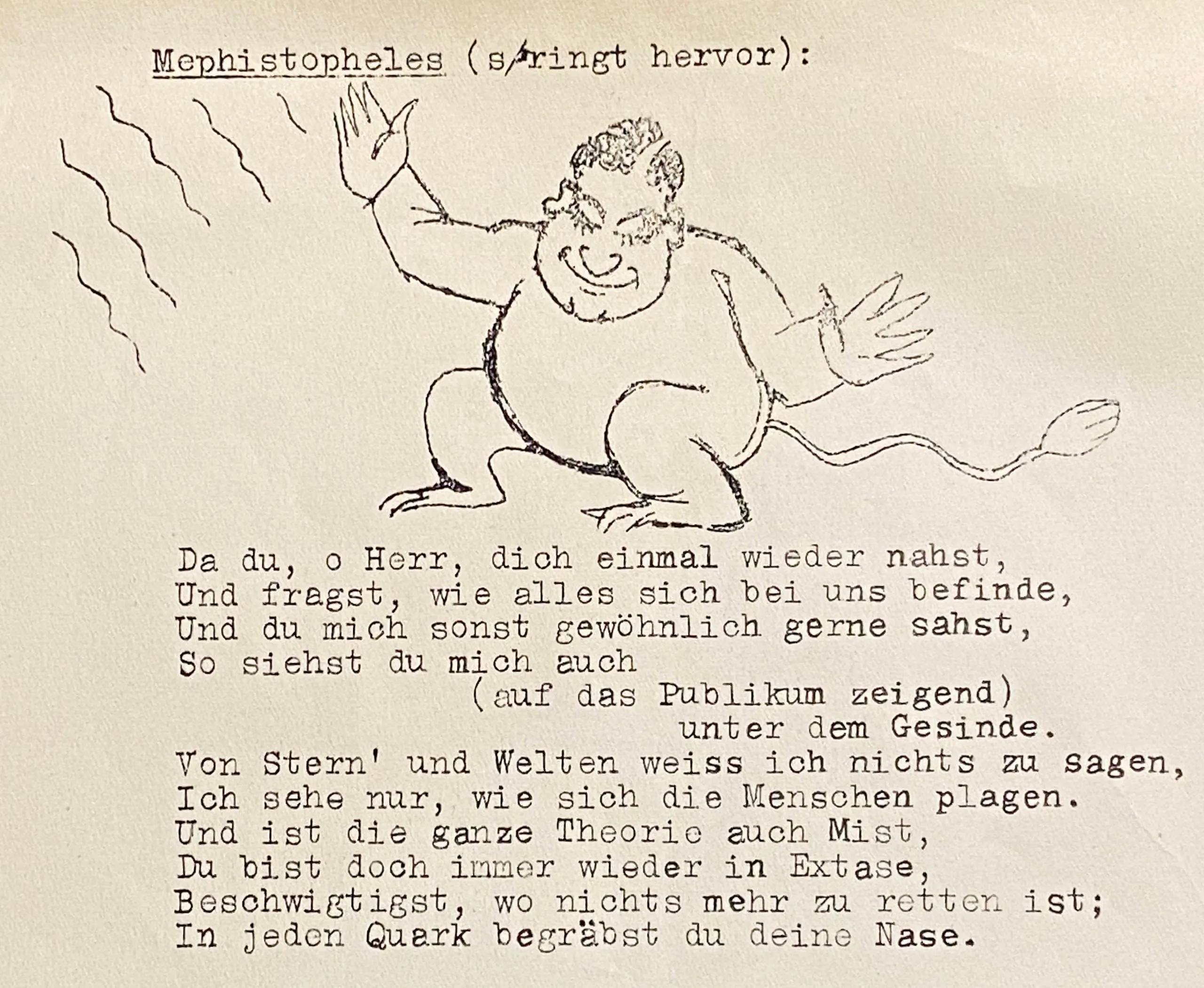
A document in CERN’s Wolfgang Pauli Archive seems to show physicists talking of ‘quarks’ over three decades before Murray Gell-Mann coined the name in 1964 from a line in James Joyce’s novel Finnegan’s Wake: “Three quarks for Muster Mark!”. Confusing at first sight, but the explanation is simple. The script of a skit parodying Goethe’s
-
…This month 60 years ago
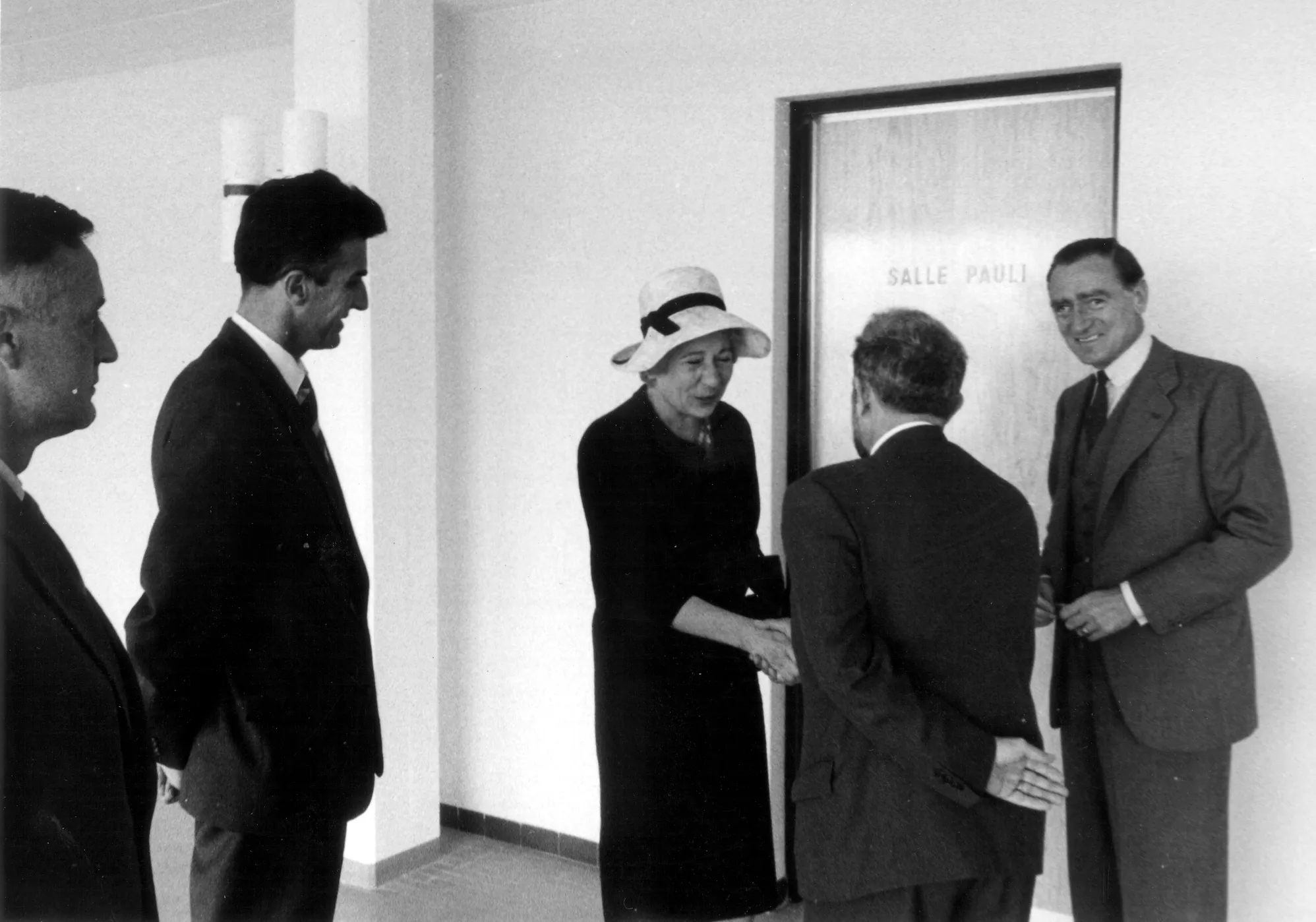
In 1960 CERN received a valuable gift: the scientific archives of Wolfgang Pauli. Following Pauli’s death in 1958, his widow Franca Pauli took charge of his scientific legacy. Helped by his former assistants Charles Enz and Victor Weisskopf, she sorted papers and tracked down originals or copies of his many letters. This rich correspondence, covering
-
…This month 68 years ago
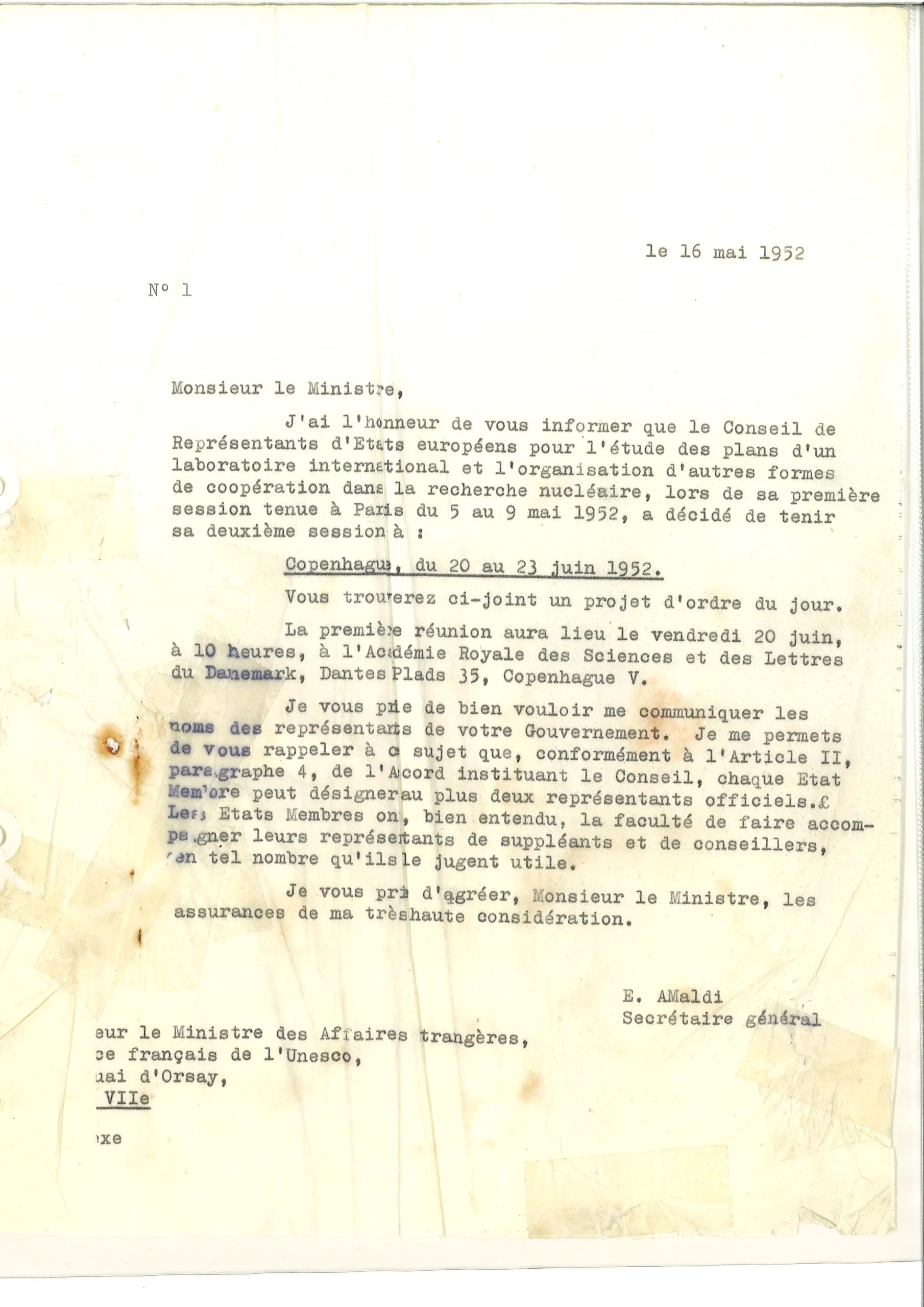
Have you ever wondered what the very first letter in the very first binder of the very long series of correspondence files produced by CERN’s Directors-General is about? If so, click here. Don’t get too excited, though. As expected for an organization just coming into existence, it deals with administrative matters, specifically the arrangements for
-
…This month 65 years ago
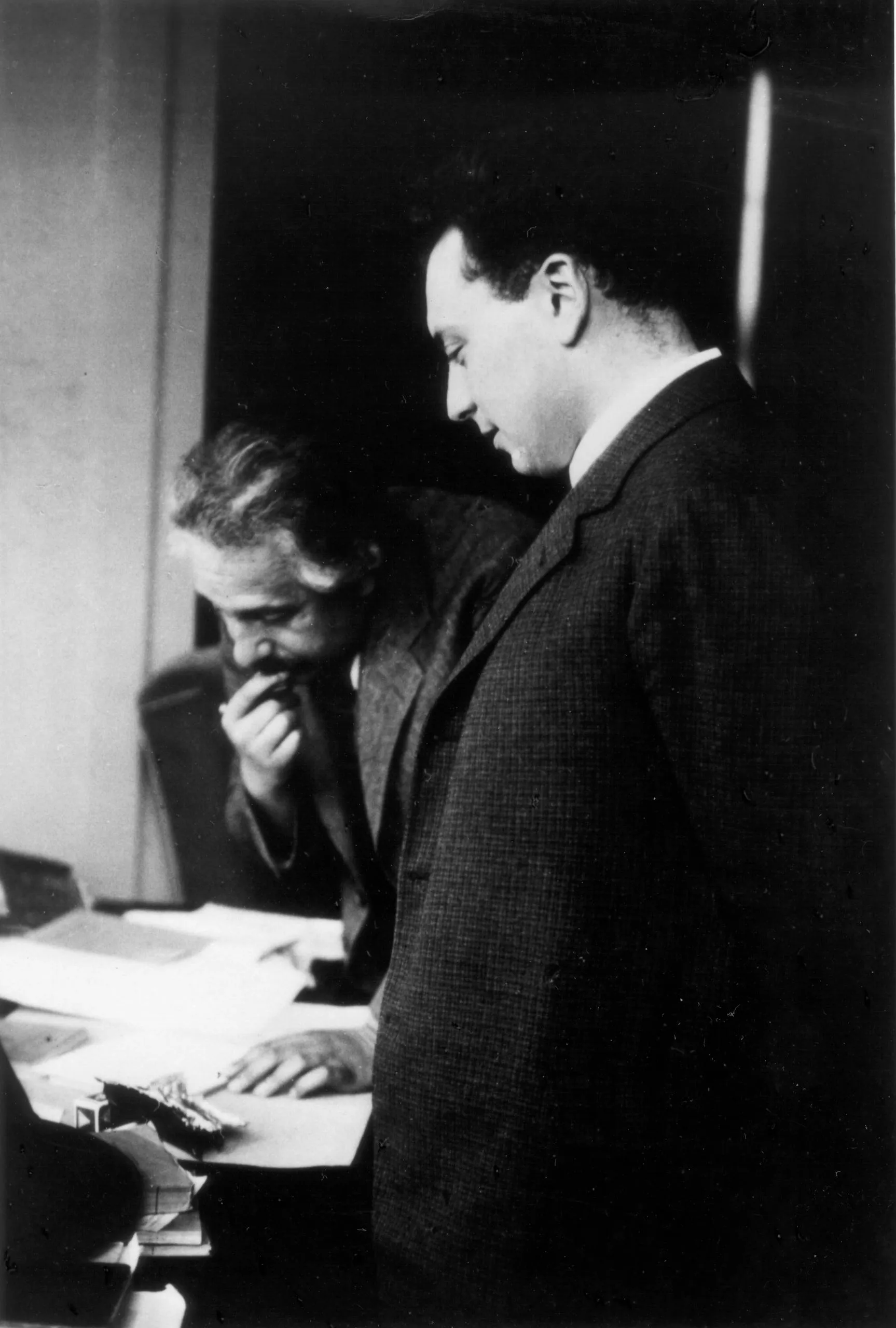
On 24 April 1955, shortly after the death of Albert Einstein, Wolfgang Pauli wrote to Max Born recalling a touching moment he had never forgotten. Pauli was working at the Institute for Advanced Study in Princeton, having left Europe for the USA during World War 2, and had just heard he had been awarded the
-
…This month 60 years ago
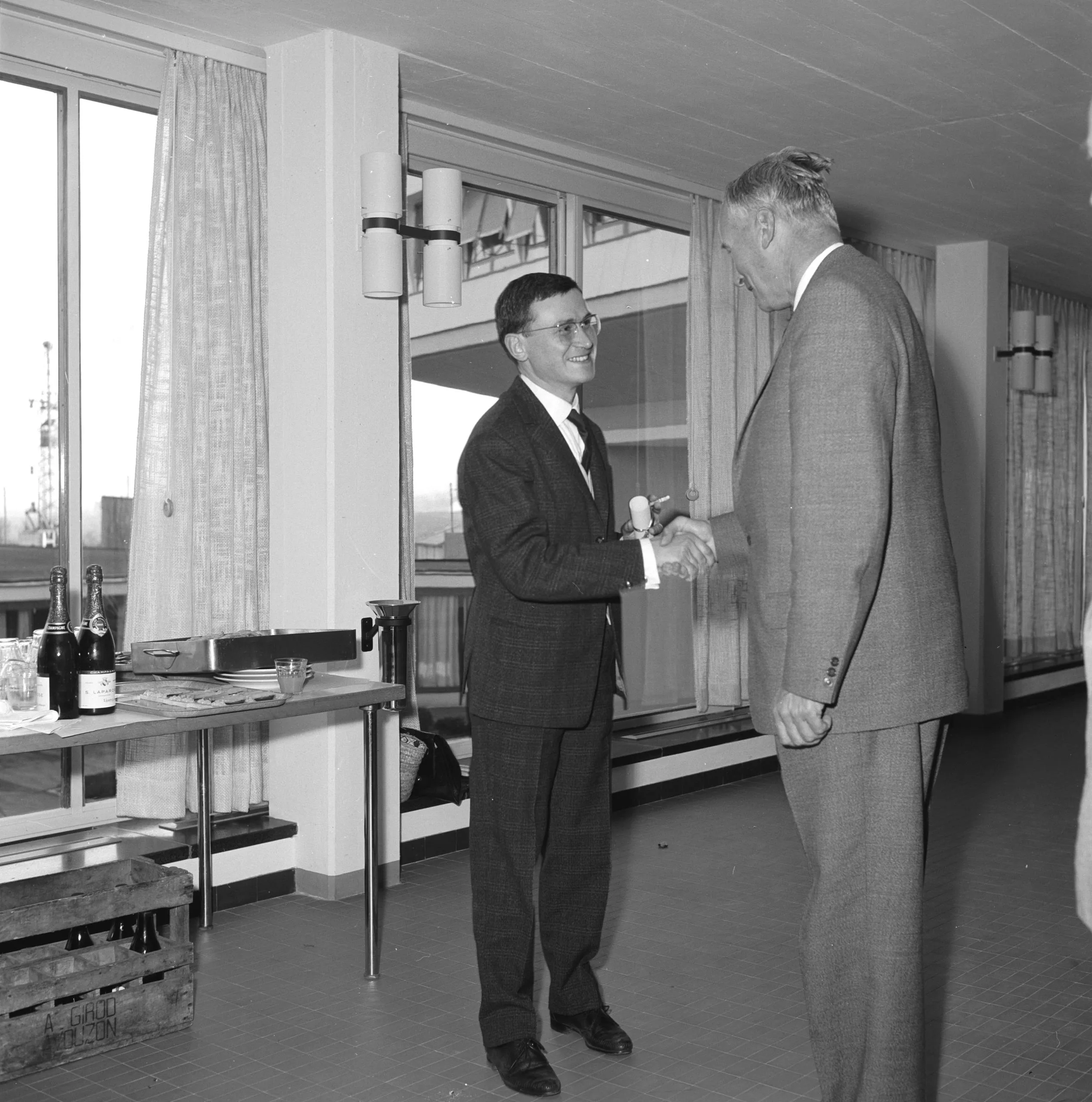
On Tuesday 22 March 1960 the growing CERN family gained a new recruit when Claude Célarier became its thousandth staff member. The young Frenchman trained as a technical draughtsman during the war, then worked in the machine-tool industry and aviation engine manufacture. In his spare time he enjoyed music, the theatre and painting. Thinking CERN
-
…This month 64 years ago
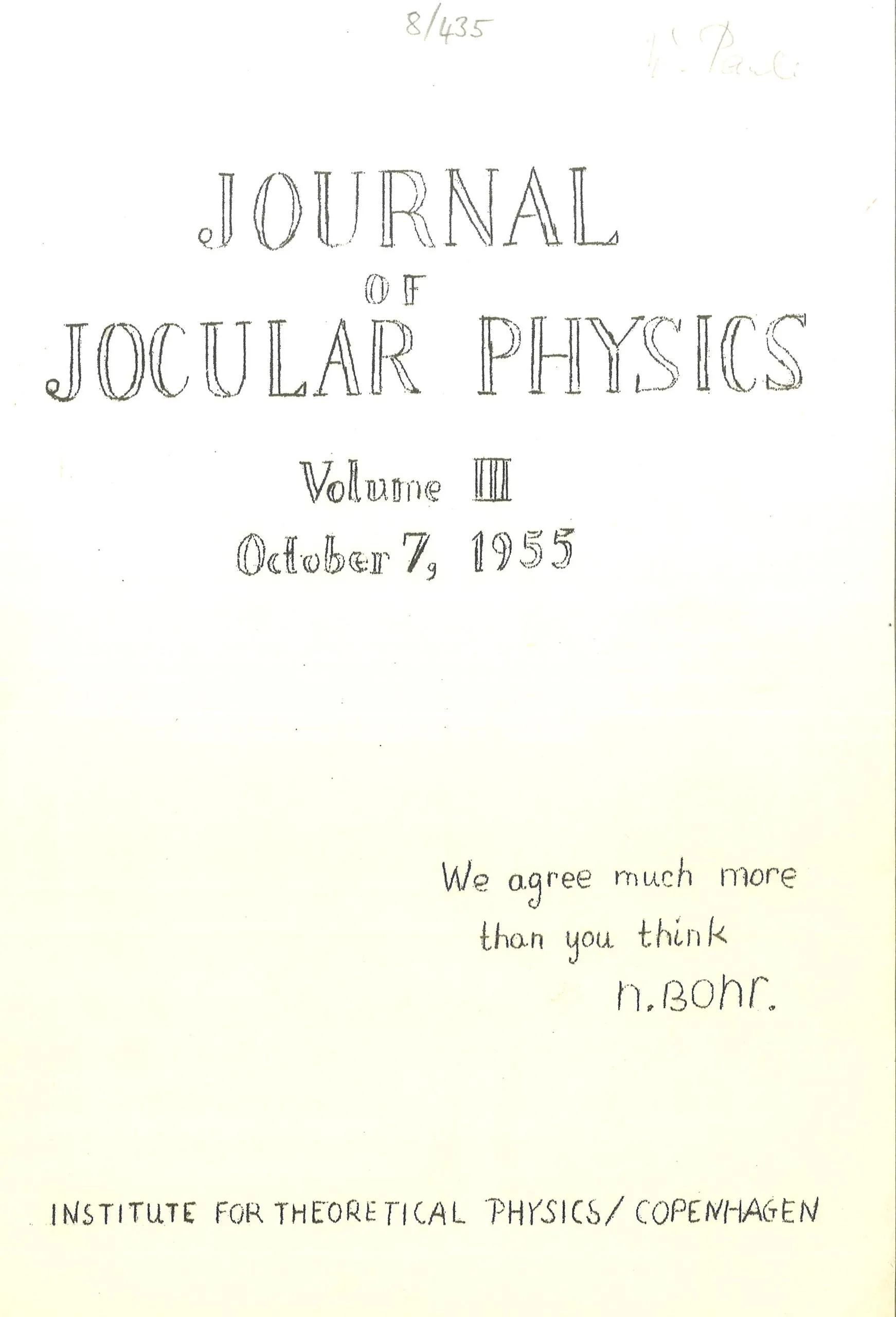
The Journal of Jocular Physics, published by the Institute of Theoretical Physics (now the Niels Bohr Institute), was a spoof journal produced in honour of Niels Bohr or his 50th 60th and 70th birthdays. The 1955 edition included a new version of Kipling’s Elephant’s Child, the Geneva Conference “Alcohol for Peace,” The Atom that Bohr
-
This month 35 years ago…
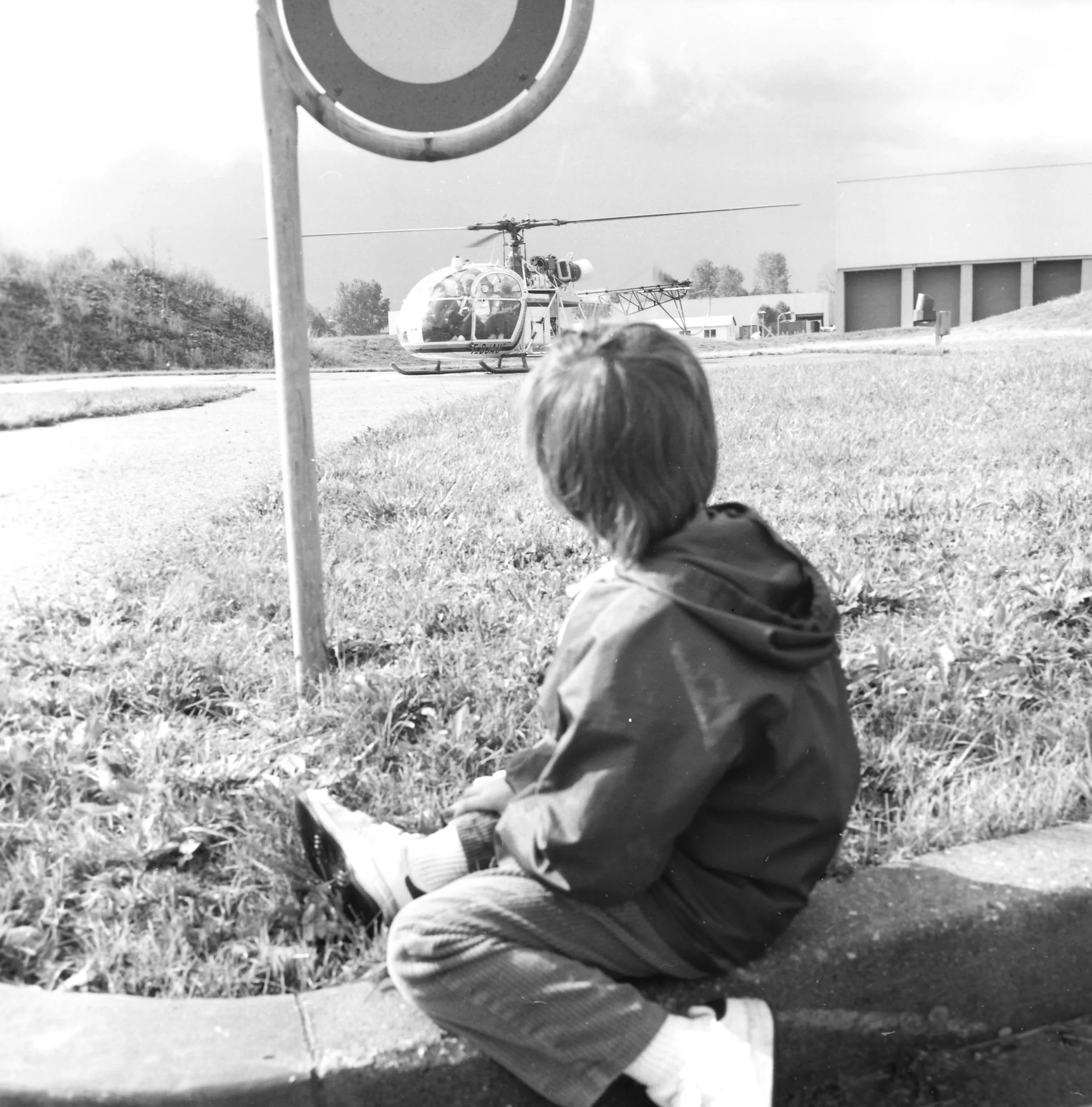
This photo shows one of the 4,500 visitors at CERN’s Open Day on 15 September 1984. The festivities, which marked the Organization’s 30th anniversary, also included a concert and a formal ceremony on 21 September. CERN’s team of historians put together an exhibition of archival documents, and a history seminar traced over three decades of
-
This month 32 years ago…
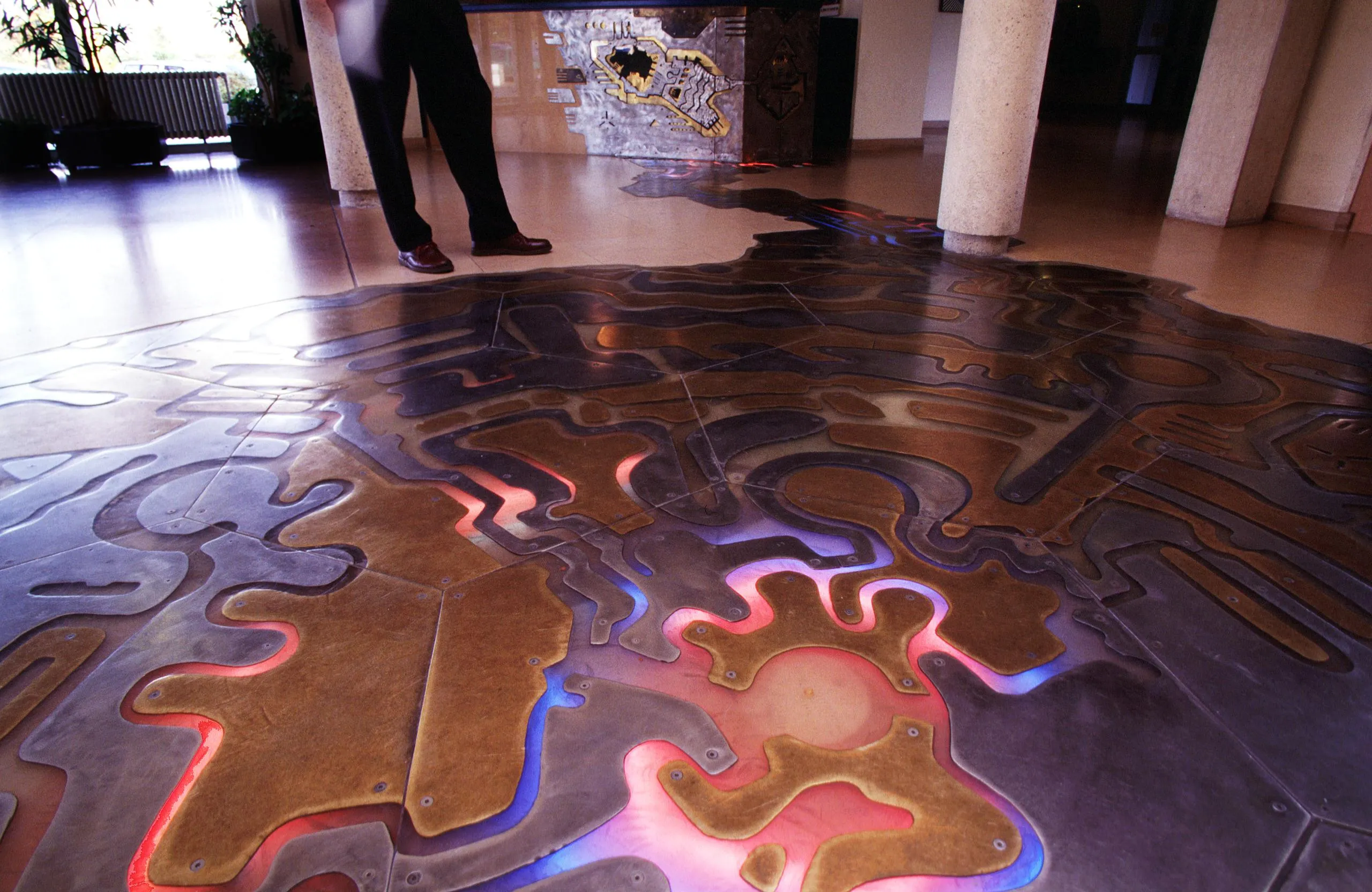
In 1985 CERN commissioned a monumental mosaic for its new reception building, Serge Moro’s “Cosmic Song”, which was completed in 1987. This photo shows the scale of the artwork, and a more dramatic picture of the swirling colours and shapes was captured by the July/August CERN Courier (p. 31). The metal and plexiglass flooring, built
-
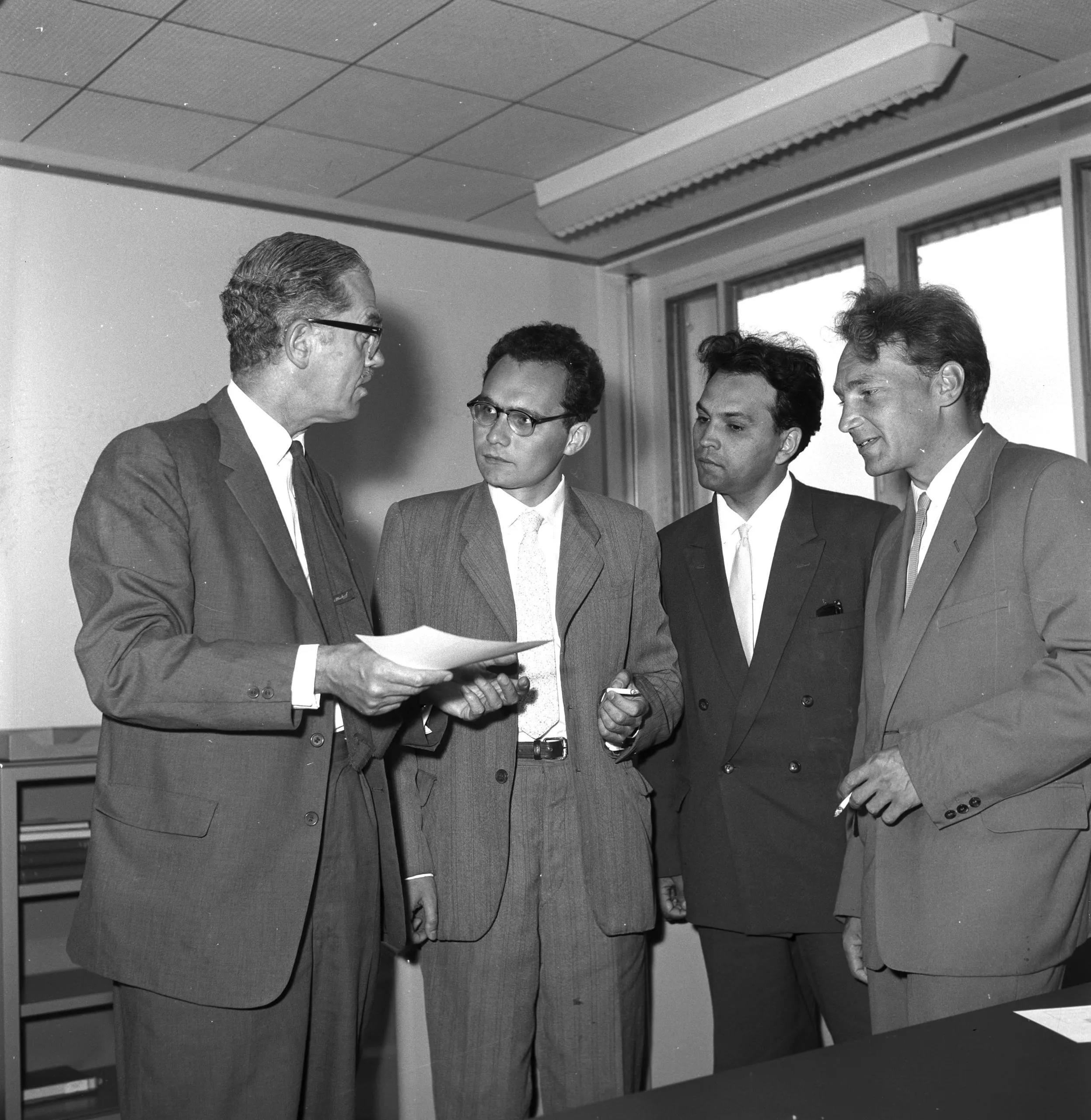
This month 59 years ago…
Following CERN’s decision in 1959 to welcome Soviet scientists, the first long-term visitors from beyond the iron curtain arrived on 18 July 1960 for a stay of six months. Vladimir Meshcheryakov and Rostislav Ryndin, from the Theoretical Physics Laboratory in Dubna, joined CERN’s Theoretical Studies Division, where they continued to work on projects begun in
-
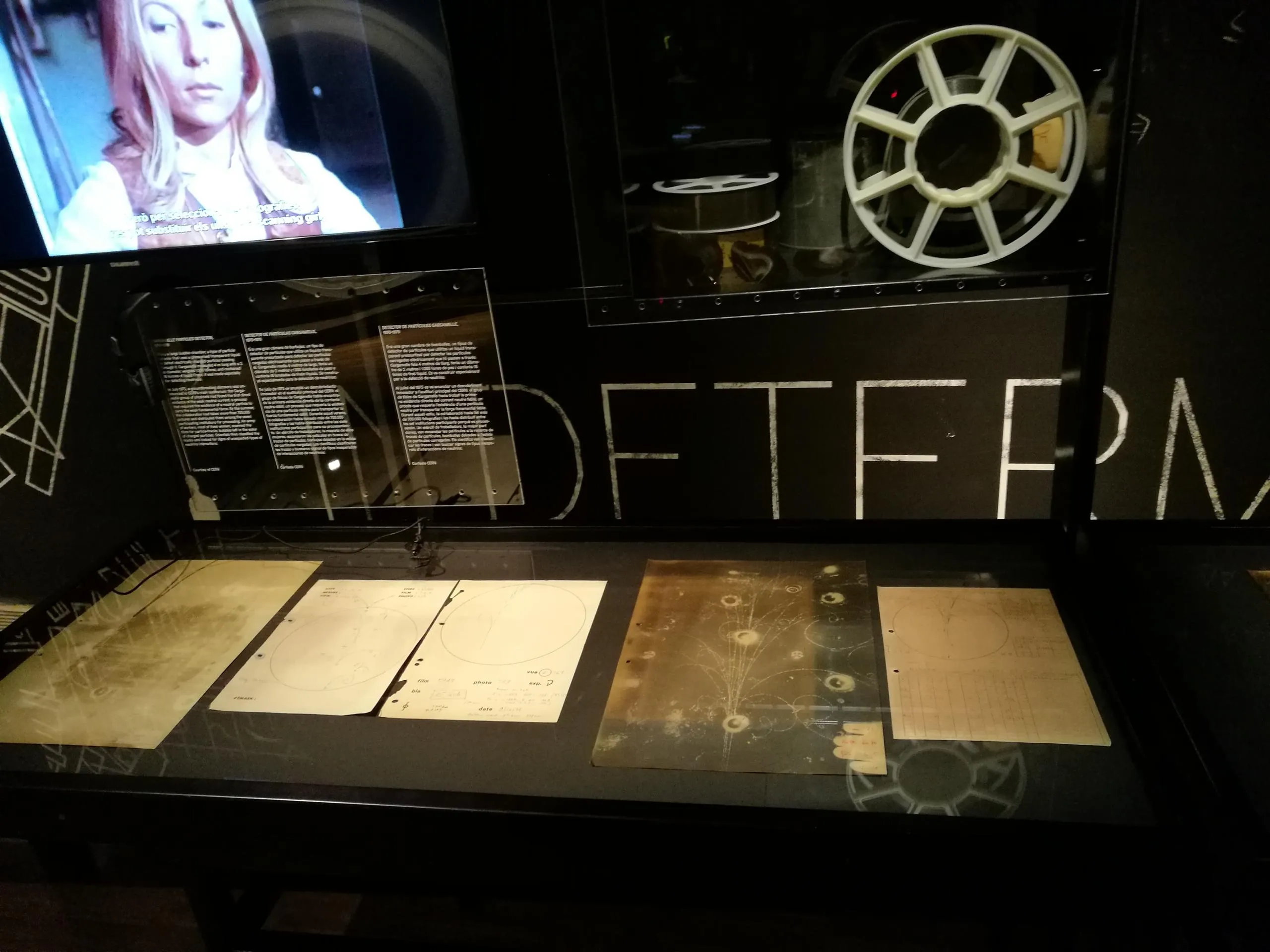
This month 48 years ago…
CERN’s Gargamelle bubble chamber was inaugurated on 7 May 1971. The giantess (named after the mother of Gargantua, in François Rabelais’ The Life of Gargantua and of Pantagruel) was 4.8 metres long by 2 metres in diameter, and weighed 1,000 tonnes. Almost half a century later, some of the pictures showing the trails of bubbles